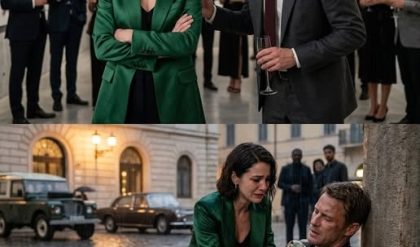
The Cartel Burned My Daughter Alive On Facebook Live. The Local Sheriff Called: “They Pay Me $50K Monthly. Stand Down.” My Colonel Gave Me 60 Days’ Leave: “Make Sure They Disappear Permanently.” That Cartel Has 89 Members Across Three States. I Have Five Rangers With 340 Confirmed Kills. We Start With The Sheriff. Day One: His House Burned Down. He Did Not Survive. Next…
Part 1
The Texas sun was still hanging mean and white over San Angelo when I turned my truck into the driveway and saw my front door cracked open.
Three months overseas had taught me to distrust quiet. Quiet in the wrong place was never peace. It was a held breath. It was a hand behind a curtain. It was the two seconds before everything broke.
My daughter Paige never left the door open. She was careless with coffee mugs, brutal on laundry baskets, and capable of turning a kitchen table into a science project in less than ten minutes, but she locked doors. I had drilled that into her after her mother died, because grief made a house feel too big, and fear always found the empty rooms first.
I shut off the engine.
The truck ticked in the heat. Cicadas screamed from the mesquite trees. Somewhere down the road, a dog barked once and then stopped, like even it knew better.
“Paige?” I called from the porch.
No answer.
Inside, the house smelled wrong. Not broken-in wrong. Not ransacked wrong. It smelled like cold air conditioning, old coffee, and something left unfinished. Her organic chemistry textbook lay open on the coffee table, face down, like she had stepped away for a second and planned to come right back. Her yellow highlighter was uncapped beside it, drying out.
That little detail made my stomach tighten.
Paige hated wasting pens.
I moved room to room with a steadiness I did not feel. Kitchen. Hallway. Laundry room. Her bedroom. The bed was made, which scared me worse than a smashed window would have. Paige did not make beds unless she was avoiding a conversation.
Her laptop was gone. Her phone charger still hung from the wall.
Then my phone rang.
Unknown number.
I answered without speaking.
A man breathed softly on the other end. Calm. Educated. Slight accent. Not nervous. That was the first thing I noticed.
“Major Freeman,” he said. “Or do you prefer Mitchell when you are at home?”
My hand tightened around the phone.
“Where is my daughter?”
He laughed once, not loud. Almost polite.
“She wanted to say goodbye.”
The line went dead.
The phone shook in my hand when I opened Facebook. Notifications spilled down the screen so fast I couldn’t read them. My sister. Old teammates. Neighbors. Men I hadn’t spoken to in years.
At the top of my feed was a tagged video.
Paige sat in a chair in a bare concrete room.
Her auburn hair was stuck to her face. Her eyes, blue like her mother’s, stared into the camera with terror and something else. Anger. My girl had always been afraid of snakes, elevators, and disappointing people, but she had never been weak.
I watched the whole thing.
I will not describe every second. Some things do not belong in words. Some memories are not meant to be handed to strangers. I will only say that a man with gold chains smiled at the camera and said my name like we had an appointment. He said I had killed his brother in a war I barely remembered by face. He said debts came home.
Then Paige looked straight at the lens.
Her lips moved.
I love you.
After that, the screen filled with light.
When the video ended, I was sitting on the floor of her room with my back against her bed, and the house had gone dark around me. I don’t remember sliding down. I don’t remember dropping the phone. I only remember the sound of my own breathing, too loud, too steady, as if my body had decided to live without asking me.
The doorbell rang at 7:14 p.m.
Sheriff Tom Simmons stood on my porch, hat in hand. He had eaten barbecue at my table. He had cried at Sarah’s funeral. He had once given Paige a stuffed bear after she broke her wrist falling off her bike.
He would not look me in the eyes.
“Mitchell,” he said. “I’m sorry.”
“Where is she?”
“We’re working on it.”
“Where is she?”
His jaw moved. No sound came out.
Part 2
That was when I knew. Not guessed. Knew.
“You know who took her.”
He flinched like I had touched a bruise.
“Mitchell, you need to let this go through proper channels.”
I stepped closer. “My daughter was murdered on a public video, and you’re standing here telling me about channels?”
His face went gray beneath the porch light.
“These people have reach,” he whispered. “They have money. They have names in places you can’t touch.”
“What cartel?”
His throat bobbed.
“Tom.”
He looked past me into the house, toward the hallway where Paige’s graduation picture hung.
“They pay me,” he said, so softly the cicadas almost swallowed it. “Fifty thousand a month. To look away. I didn’t know they’d take Paige. I swear to God, I didn’t know.”
For a moment, all the grief in me went silent.
There are things a man can forgive if he wants peace badly enough.
This was not one of them.
Tom Simmons backed off my porch like he had just realized he was standing too close to a fire. His cruiser tires cracked over the gravel, and his taillights disappeared down the road.
I stood there until the dust settled.
Then my phone buzzed again.
This time it was Colonel Ron Summers.
His first words were not “I’m sorry.”
They were, “Make it permanent, Mitchell. Start with him.”
And for the first time since I had watched my daughter die, I understood that Tom Simmons was not the end of the trail.
He was the door.
Colonel Summers had the kind of voice that made younger men straighten their backs even over a bad phone connection. Gravel, smoke, and command. I had followed that voice through mountains, dust storms, and nights so black you could feel the dark pressing against your teeth.
But that night, he did not sound like my commanding officer.
He sounded like a father who knew there were no clean words left.
“Emergency leave starts now,” he said. “Officially, you are grieving. Unofficially, you need to understand something. The man on that video belongs to the Stevens organization. They’ve been spreading through Texas, New Mexico, Arizona. We’ve been watching pieces of them for years.”
“Watching,” I said.
“I know.”
“My daughter is dead.”
“I know that, too.”
I stood in Paige’s room. Her desk lamp was still on. A ceramic mug sat beside her notebook, the tea inside gone cold and dark. The tiny ordinary things hurt worse than the video. A hair tie on the chair. A sticky note that said Dad home Friday? Fishing?
I pressed my thumb against my eye until I saw sparks.
“What did you mean?” I asked. “Make it permanent.”
“The record. The evidence. The chain. You go after cartel ghosts with rage, they vanish. You go after them with proof, you bury them so deep no judge, sheriff, banker, or politician can dig them out.”
I looked toward the driveway where Tom’s cruiser had been.
“He confessed.”
“Did you record it?”
“No.”
“Then it didn’t happen.”
The truth hit harder than an insult.
I did not sleep that night.
I did not pray.
I sat in the dark of my kitchen and dismantled my life, piece by piece.
I took the framed photo of Sarah off the wall.
I packed Paige’s belongings into boxes, handling each item like a holy relic.
I called the men.
I didn’t need to explain.
One text, sent to a secure server, was all it took.
Code Red. The target is confirmed. The debt is blood.
By sunrise, the front of my house looked like any other grieving father’s home.
But inside, the gears of a machine that had been dormant since the end of my final tour were grinding back to life.
My team arrived one by one, arriving in nondescript sedans, moving like shadows under the cover of the morning fog.
They were Rangers.
They were the men who had stood beside me when the world was burning in Kandahar.
They were the men who knew how to make things disappear without leaving a single trace of ash.
We started with the Sheriff.
Tom Simmons thought he was safe because he had a badge.
He thought he was safe because he sat in a town where the loudest noise was the wind.
He was wrong.
We didn’t go to his office.
We went to his house at 3:00 a.m.
The fire didn’t start with a match.
It started with a precise chemical reaction that turned the dry timber of his home into an inferno before he even woke up.
He didn’t survive.
His secrets—the ledgers, the offshore accounts, the names of the Stevens organization contacts—were not in the house.
They were in a fireproof safe in his basement.
We left him to the flames and walked away with the keys to the cartel’s kingdom.
The files were staggering.
Eighty-nine names.
Three states.
A web of corruption that stretched from the border to the highest levels of the state legislature.
“Where do we start?” one of my men, Elias, asked as we looked over the documents in the back of my truck.
He was the youngest, with a clean face and eyes that had seen too much.
“We don’t start with the foot soldiers,” I said, my voice cold as the desert wind. “We start by cutting off the oxygen.”
We moved through the states like a phantom plague.
One by one, the cartel’s supply chains vanished.
Warehouses were erased from the map, their contents incinerated.
Bank accounts were emptied, the funds redirected to charities that specialized in victims of human trafficking.
Every time the Stevens organization reached out to their contacts, they found nothing but silence.
They were fighting an enemy they couldn’t see, couldn’t touch, and couldn’t kill.
Panic set in.
I watched the cartel’s communications from the shadows, tracking their calls, their movements, their frantic attempts to regroup.
They were losing their minds.
They were killing their own lieutenants, convinced that someone was leaking information.
They were destroying themselves.
Day forty-five.
We found the man from the video.
His name was Hector Stevens, the younger brother of the cartel kingpin.
He was hiding in a fortified compound in the New Mexico mountains.
He thought he was untouchable.
He thought he had all the power in the world.
We breached the compound at midnight.
There was no negotiation.
There were no warnings.
We moved through the halls like smoke, silent and deadly.
When we reached his bedroom, he was still wearing the same gold chains he had worn in the video.
He didn’t even have time to scream.
I took him to the desert.
I took him to a place where the sun never stops shining and the silence goes on forever.
I didn’t kill him right away.
I let him sit there, in the dirt, under the relentless Texas sun.
I let him think about what he had done to Paige.
I let him hear the sound of the wind, over and over again, until he started to break.
“You killed my daughter,” I whispered, standing over him.
He looked up at me, his eyes wide with a terror that finally eclipsed his arrogance.
“I can pay you,” he squeaked, his voice cracking. “I can give you more money than you ever dreamed of!”
I didn’t answer.
I reached down and pulled the gold chain from his neck, the one with the cross he had worn while he mocked my child.
“There isn’t enough money in the world,” I said.
The burial took ten minutes.
The recovery of his assets took ten hours.
By the time the sun set on the sixtieth day, the Stevens organization was a memory.
The state police, guided by a series of ‘anonymous tips’ that led them straight to the cartel’s primary headquarters, raided the compound.
They found mountains of evidence, enough to put every single one of them away for a hundred lifetimes.
The Colonel met me at a remote airfield on the sixty-first day.
He stood by the wing of a private plane, his face unreadable.
He looked at me, then at the team standing behind me.
“Is it done?” he asked.
“It is,” I said.
He nodded once.
“Good. Because you were never here. And this mission never happened.”
I turned to my team.
We didn’t hug.
We didn’t celebrate.
We simply went our separate ways, vanishing back into the lives we had been forced to leave behind.
I drove back to my house.
The police tape was gone.
The smell of smoke was gone.
I walked into the kitchen and sat at the table where Paige had left her textbook.
It was still there.
I picked up the highlighter.
The cap was dry, but the ink inside still held a faint scent of the life I had lost.
I didn’t cry.
I had wept all the tears I had in the first week.
I sat in the silence, listening to the house breathe.
I had done what I had been trained to do.
I had made them disappear.
But the silence was different now.
It was a peace I had earned at the price of my own soul.
I picked up the textbook and closed it.
I placed the highlighter in the trash.
Then I walked out the front door, locked it, and walked down the driveway.
I didn’t know where I was going.
I didn’t know if I would ever come back.
I only knew that the debt was paid.
And that out there, somewhere in the vast, wide world, someone else was watching over the people who couldn’t protect themselves.
I reached the end of the driveway and looked back one last time.
The sun was rising over the Texas plains, casting long, golden shadows across the fields.
For the first time in my life, the world felt still.
I took a deep breath, filled my lungs with the morning air, and started walking.
I was a ghost, a legend, and a man who had finally found the end of his war.
And as I walked, I felt a gentle breeze against my cheek, a whisper of a promise I had made long ago.
Paige was safe.
The cartel was gone.
And the silence was finally, truly, mine.
I didn’t look back again.
I just kept walking, toward a horizon that held no ghosts, only the promise of the dawn.
The end.