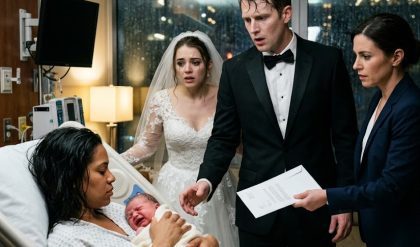
“Without Me, She’d Be Homeless,” My Father Smirked In Court. The Judge Looked At Me. “So… They Really Don’t Know?” My Father’s Lawyer Frowned. “Know What?” “Actually… She’s…” My Father Went Pale.
“Without me, she’d be homeless.”
My father said it loud enough for the back row to hear.
His voice rolled through Courtroom Three like a church bell with rust inside it, heavy and ugly, bouncing off the old wooden walls and the ceiling fans that never seemed to move enough air. A few people chuckled. Not many. Just enough to make the humiliation feel public.
I kept my hands folded in my lap.
My thumbs rested against each other. My nails were trimmed short. No polish. No rings except the thin gold band I still wore for Harold, even though he had been gone nearly eight years. I stared at the worn railing in front of me where generations of nervous fingers had scratched little half-moons into the varnish.
My father’s attorney, Richard Coleman, smiled like he had just delivered the final blow.
My brother Daniel sat two seats behind him, wearing a navy suit that looked expensive from far away and desperate up close. His wife Crystal had come too, of course. She loved any event where someone else might be embarrassed. She sat with her purse clutched in her lap, eyes bright, mouth pressed into a tiny line of satisfaction.
I did not look at any of them.
Judge Whitmore did.
He was an older man with silver hair, deep lines around his mouth, and the tired patience of someone who had spent thirty years listening to people lie under oath. He looked at my father for a long moment. Then he looked at me.
Not at my lawyer.
Not at the papers.
At me.
“So,” he said quietly, “they really don’t know?”
The courtroom changed.
I felt it before I heard it. The small coughs stopped. Someone’s bracelet quit jingling. Even the court reporter paused with her fingers hovering above the keys.
My father’s lawyer blinked.
“Your Honor,” Coleman said carefully, “know what?”
Judge Whitmore leaned back in his chair. His eyes stayed on me, and for one terrible second I thought he was going to say it all right there, before I had prepared myself for the sound of it.
“Actually,” he began, “she is…”
Then he stopped.
And that was when my father’s face lost every bit of color.
But that was not where the story started.
No. My life had been quietly cracking for years before my father dragged me into court and mocked me in front of half of Savannah. The truth is, my family had been living inside a story they wrote about me a long time ago, and they were too proud, too comfortable, and too selfish to notice when the story stopped being true.
My name is Margaret Hayes.
Most people call me Maggie.
I was sixty-one years old when my father tried to evict me from the house everyone in town believed belonged to him.
Hayes Manor sat just outside Savannah, tucked near Isle of Hope behind iron gates, ancient oaks, and Spanish moss that hung like gray lace from the branches. It was the kind of house tourists slowed down to admire. Wide porch. Tall windows. Brick paths cracked by roots. White columns that looked grand from the road and needed painting if you stood close enough.
My father loved that house because people thought it meant something.
Old family. Old money. Old respect.
He let them think it had belonged to the Hayes family for generations.
That was the first lie.
Not the biggest one. Just the first.
I had lived there quietly for seven years before the lawsuit. I cooked. I kept the garden alive. I paid bills nobody noticed arriving. Three days a week, I volunteered at the VA clinic downtown, where the air always smelled like burnt coffee, floor cleaner, and old paper files.
At the clinic, they knew me as Maggie.
No one asked too many questions. Veterans are good at recognizing silence. Real silence, not shyness. The kind that has weight behind it.
My father recognized nothing.
Walter Hayes was eighty-two and still walked like he expected doors to open before he touched them. He had run a construction company when Savannah was expanding, when handshakes mattered and men could build reputations out of concrete, tobacco breath, and intimidation. People said he was strong. I knew better.
Strong people do not need to make everyone else feel small.
My brother Daniel was fifty-eight and still treated like the family prince. Failed business deals. Debts. Lies dressed as opportunities. My father called him “ambitious.”
He called me “Margaret” like the name tasted sour.
The Sunday dinner that started everything smelled like pot roast, onions, and thunder coming in from the marsh.
Daniel arrived late, talking into his phone about investors I doubted existed. Crystal brought a peach pie from the grocery store and transferred it onto one of my mother’s plates as if that made it homemade. My father sat at the head of the table beneath the old chandelier, carving meat with the seriousness of a man performing surgery.
Halfway through dinner, he wiped his mouth and said, “I’ve decided to sell the property.”
Daniel stopped chewing.
Crystal’s fork froze above her plate.
I set down my glass.
My father looked directly at me. “You’ll need to make arrangements, Margaret.”
The room was quiet except for rain ticking against the windows.
Part 2
The room was quiet except for rain ticking against the windows.
I said, “You can’t sell it.”
He laughed once.
It was not amusement. It was warning.
“Excuse me?”
“You can’t sell the estate.”
His eyes narrowed, and I saw the familiar shift in him, the one I had known since childhood. That little spark of pleasure he got when he believed someone needed to be put in their place.
“I think I know what I own,” he said.
I looked at the roast cooling on everyone’s plates, at my mother’s blue china, at the candle wax sliding down the brass holders.
“No,” I said softly. “You don’t.”
Daniel muttered, “Maggie, don’t start.”
But my father was already smiling.
Not kindly.
“Seven years,” he said. “Seven years I let you live under my roof after your life fell apart. And now you’re telling me what I can do with my own house?”
I should have answered.
I should have told him everything right then.
Instead, I stood and began clearing plates.
“You should speak with a lawyer before you try anything,” I said.
Behind me, my father’s chair scraped against the floor.
And for the first time that night, I heard something in his voice besides anger.
I heard fear.
The eviction papers came eleven days later.
The deputy who served them looked like he wanted to apologize before he even climbed the porch steps. He held the envelope with both hands, rain dripping from the brim of his hat onto the brick path.
“Mrs. Hayes?” he asked.
“Yes.”
He glanced past me into the hallway, where afternoon light stretched across the old pine floorboards.
“I’m sorry, ma’am.”
That word.
Ma’am.
Most women my age in Georgia hear it all the time, but the way he said it had a little spine in it. A little formality. His eyes flicked once to the small framed photograph on the hall table, not of me in uniform, thank God, but of Harold and me standing beside a Navy pier years ago. Harold had his arm around my waist. I wore sunglasses and a windbreaker. Nothing obvious.
Still, the deputy noticed something.
I took the envelope.
“Thank you.”
He hesitated. “You have a good day, ma’am.”
Then he walked back through the rain, shoulders stiff.
I stood in the doorway until his cruiser disappeared beyond the gate.
The paper was thick. Expensive. Richard Coleman’s office believed in intimidation you could feel between your fingers. I opened it in the kitchen while the kettle hissed on the stove. The words were clean and cruel.
Walter Hayes, lawful owner.
Margaret Hayes, unlawful occupant.
Immediate removal requested.
I read it once, then folded it neatly and set it beside the sugar bowl.
For a long time, I listened to the old house breathe.
Houses do that. Old ones especially. Pipes tick. Wood settles. Wind rubs against windows. If you live quietly enough, a house will tell you what kind of grief it has stored.
This house had stored plenty.
My phone rang at 4:17.
Daniel.
I let it ring four times before answering.
“Maggie,” he said with a sigh, already tired of a conversation he had started. “Listen. Dad’s upset. You know how he gets.”
The courtroom smelled faintly of old wood, paper, and rain-soaked coats.
Outside, a storm rolled across Savannah.
Inside, every seat was occupied.
People loved a public downfall.
Especially when they believed they already knew the ending.
At the center of the room sat Eleanor Brooks.
Sixty-two years old.
Widowed.
Quiet.
The woman everyone assumed was about to lose everything.
Across the aisle sat her father, Charles Brooks.
Eighty-three years old.
Founder of Brooks Development.
A man whose reputation had intimidated bankers, politicians, and competitors for nearly half a century.
Today he wore a gray suit and a satisfied smile.
His attorney stood confidently.
His son, Victor, sat beside him.
Victor’s wife, Amber, looked almost excited.
The entire family had spent months telling everyone the same story.
Eleanor was stubborn.
Eleanor was dependent.
Eleanor had been living in Charles’s house out of charity.
And now Charles simply wanted his property back.
Simple.
Reasonable.
Legal.
At least that was the story.
Then Charles stood and delivered the sentence that made several spectators nod in agreement.
“Without me, she’d be homeless.”
The words echoed through the room.
Eleanor lowered her eyes.
Not because she was ashamed.
Because she was tired.
Tired of hearing a lie repeated so often that strangers accepted it as fact.
For years she had remained silent.
For years she had protected people who never protected her.
Today would be different.
Judge Harrison leaned back slightly.
His gaze shifted toward Eleanor.
Something unreadable flickered across his face.
“Mrs. Brooks,” he said, “would you like to respond?”
The entire room waited.
Eleanor slowly rose.
Her movements were calm.
Measured.
She looked first at her father.
Then at her brother.
Then at the crowd.
“I suppose,” she said quietly, “that depends on who actually owns the house.”
The room instantly went silent.
Victor laughed.
A short, nervous laugh.
“Dad owns the house.”
Eleanor turned toward him.
“Are you sure?”
The confidence disappeared from Victor’s face.
Not completely.
Just enough.
Enough for Judge Harrison to notice.
Enough for Charles Brooks to grip the edge of his table.
And enough for Eleanor to know the truth was finally close.
The story had really begun twelve years earlier.
The year her husband died.
Michael Brooks had been many things.
Stubborn.
Brilliant.
Occasionally impossible.
But he had loved Eleanor completely.
During his final illness, he had spent months organizing documents.
Trusts.
Contracts.
Property records.
Letters.
He told Eleanor she would understand eventually.
At the time she thought he was preparing for death.
She never realized he was preparing for war.
After Michael passed away, grief swallowed everything.
Charles stepped forward.
Victor stepped forward.
The family surrounded her with sympathy.
Advice.
Guidance.
Documents.
There were always documents.
Papers to sign.
Forms to review.
Estate matters.
Business matters.
Family matters.
Eleanor signed almost nothing.
Michael had taught her one lesson repeatedly.
Never sign what you do not understand.
That habit irritated her family.
Especially Victor.
For years Victor insisted their father owned the estate.
For years Charles spoke as though the property belonged exclusively to him.
For years Eleanor quietly maintained the house.
Paid contractors.
Managed taxes.
Covered insurance payments.
The bills never went through Charles.
They went through her.
Nobody questioned why.
Nobody wanted to.
Truth has a way of ruining comfortable arrangements.
Now, standing in court, Eleanor nodded toward her attorney.
A young woman named Rebecca Lin.
Rebecca opened a briefcase.
Removed a thick stack of documents.
And handed them to the judge.
Charles’s attorney frowned.
“What exactly are these?”
Rebecca smiled.
“Property records.”
The judge began reading.
The room remained still.
Thirty seconds passed.
Then a minute.
The judge adjusted his glasses.
Read another page.
Then another.
Finally he looked up.
Directly at Charles Brooks.
“Mr. Brooks,” he said carefully, “did you know these records identify the property as belonging to the Brooks Family Preservation Trust?”
Charles’s face tightened.
“Of course.”
“And were you aware that you are not listed as the primary beneficiary?”
Victor’s expression changed instantly.
Amber stopped smiling.
Charles said nothing.
The judge continued.
“The primary beneficiary is Eleanor Brooks.”
A collective gasp moved through the gallery.
Someone actually dropped a pen.
Victor shot to his feet.
“That’s impossible.”
Rebecca slid another document forward.
“Actually, it’s very possible.”
Judge Harrison reviewed it.
Then another.
Then another.
The evidence formed a picture.
A very clear picture.
Years earlier, Michael had purchased the property through a preservation trust designed to protect historic estates.
Charles had never owned it.
Not legally.
Not even partially.
He had simply allowed everyone to believe he did.
And because of his reputation, nobody challenged the story.
Victor’s confidence collapsed first.
It always does.
The loudest people tend to fall apart fastest.
He began arguing.
Then demanding.
Then accusing.
He claimed the documents were fraudulent.
Rebecca calmly produced certified copies.
He claimed Eleanor manipulated records.
The county registrar testified otherwise.
He claimed Michael had changed the trust secretly.
The trustee appeared in person.
One by one, every excuse disappeared.
The courtroom watched the unraveling in real time.
Charles remained silent.
Which frightened Eleanor more than shouting would have.
Because for the first time in her life, her father looked old.
Not powerful.
Not intimidating.
Old.
A man whose authority depended entirely on people believing it existed.
Then came the final revelation.
The one even Victor did not know.
Rebecca produced a sealed letter.
Michael’s letter.
Written before his death.
Addressed specifically to the trustee.
The judge authorized its reading.
Eleanor listened.
Her hands trembling.
Michael’s words filled the room.
He wrote that he loved his wife.
That he trusted her judgment.
And that he feared Charles and Victor would eventually attempt to control the estate.
Therefore, if any legal action was ever filed against Eleanor regarding ownership of the property, additional instructions would become active.
The trustee stood.
Opened another envelope.
And revealed the instructions.
Several investment accounts.
Commercial properties.
And trust assets worth over forty million dollars.
All controlled by Eleanor.
All unknown to Charles.
All unknown to Victor.
The room exploded with whispers.
Victor looked physically ill.
Amber grabbed his arm.
Charles closed his eyes.
For several seconds nobody spoke.
Then Judge Harrison broke the silence.
“Mr. Brooks,” he said quietly, “it appears your daughter is not occupying your property.”
He paused.
Then added:
“You’ve been attempting to evict the owner.”
The ruling took less than fifteen minutes.
The eviction case was dismissed.
Costs were assessed against Charles.
Additional investigations were ordered regarding several questionable financial representations submitted to the court.
By the time everyone stood to leave, the story the town believed had completely reversed.
The dependent daughter.
The generous father.
The successful son.
None of it had been true.
Not really.
Outside the courthouse, reporters waited.
Rain fell steadily.
Microphones appeared.
Questions flew.
Eleanor ignored them.
She walked slowly down the courthouse steps.
Past cameras.
Past spectators.
Past curious strangers.
At the bottom stood Charles.
Alone.
Victor had already disappeared.
Amber too.
For the first time in years, father and daughter faced one another without an audience.
Charles looked smaller.
“I didn’t know,” he said quietly.
Eleanor studied him.
Perhaps he was telling the truth.
Perhaps not.
It no longer mattered.
“You never asked,” she replied.
The rain continued falling.
Neither moved.
Finally Charles lowered his head.
And Eleanor walked away.
Not because she had won.
Not because she wanted revenge.
But because some victories are not about defeating someone else.
They are about finally refusing to live inside a lie.
And for the first time in decades, Eleanor Brooks was free.
The end.